

Overview
A public installation that reads the sky through eight cultures at once.
Purpose & Vision
Connecting culture to the cosmos
Stars from Home is a public installation project designed to connect the University of Waterloo (UW) community with the sun, moon, and stars through diverse cultural perspectives and representation. Comprised of eight unique pillars representing prominent cultures in the UW community, the installation encourages inclusivity, celebrates unity, and fosters curiosity about celestial objects.
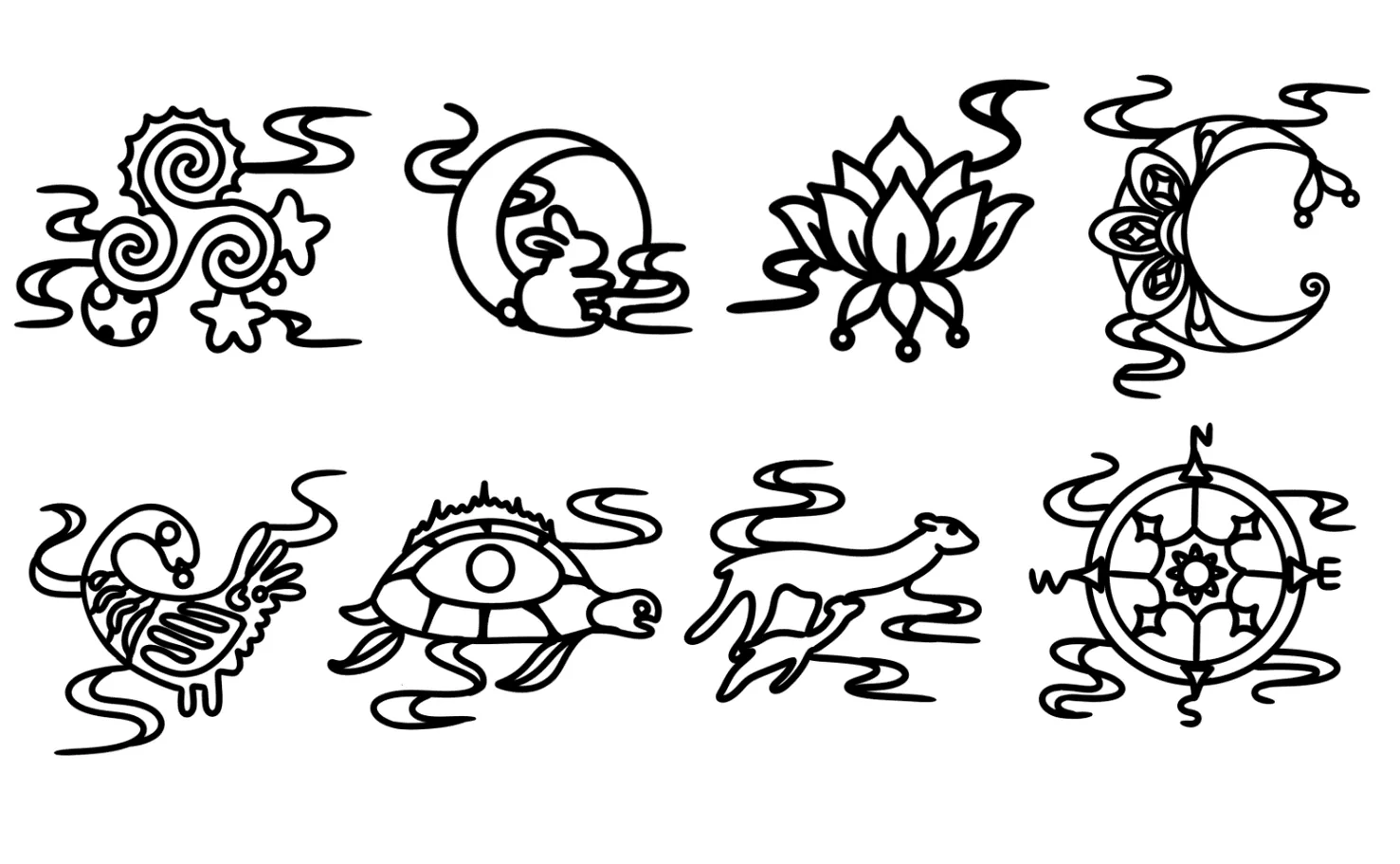
The 8 Final Prints
The installation invites viewers to learn from, engage with, and feel connected to celestial elements, their homeland, and the broader UW community. It promotes cultural education, accessibility for all abilities, and environmental responsibility through sustainable materials.
System of Concern:
- Connecting the UW community with the sun, moon, and stars
- Promoting cultural education and inclusivity
- Fostering community engagement
- Accessible to individuals of all abilities
- Incorporate sustainable materials
Ideation & Design
From 120 ideas to one vision
We brainstormed over 120 ideas before narrowing down to three final contenders. Ultimately, we chose the pillar design because it best met our goals. The telescope concept was too limiting — usable by only one person at a time — while the coloured glass idea was overly dependent on sunlight, reducing visibility and reliability.
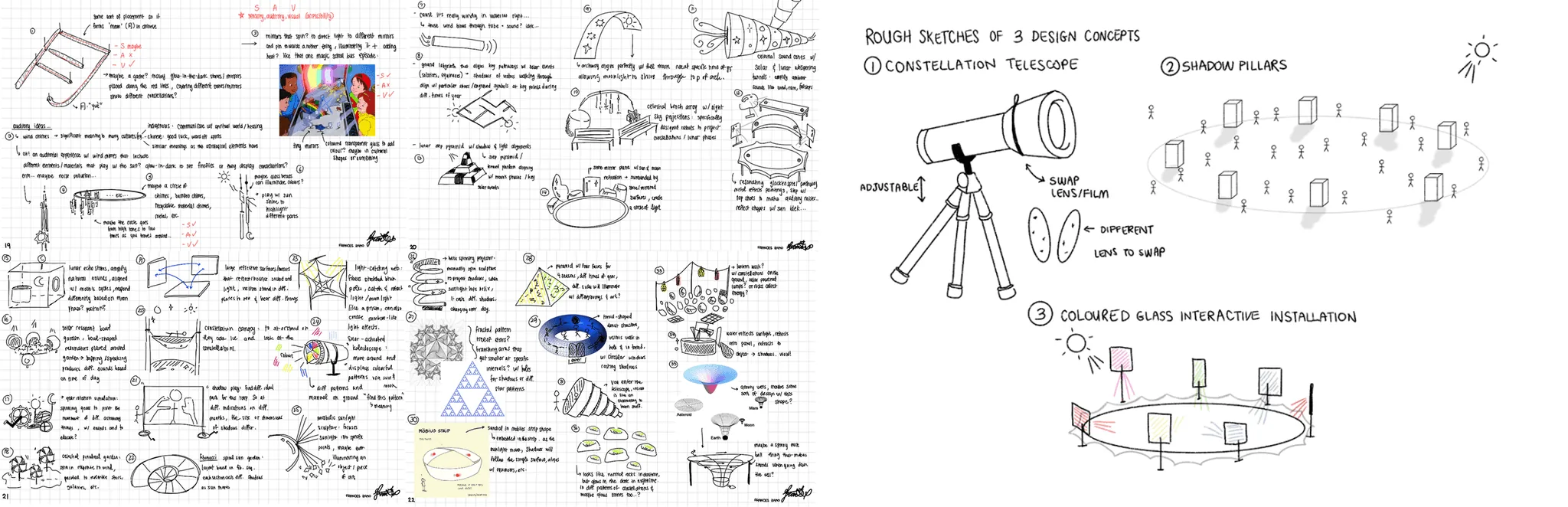
Learning to narrow down our ideas
We used the engineering design process of researching, planning, testing, and iterating. Low-fidelity prototypes were made using cardboard and crafting wire. In parallel, we developed digital renderings in Blender to simulate the sun’s path and its impact on the installation’s shadows. We revisited our requirements and added multi-sensory elements to improve accessibility — such as physical engravings and braille translations — so the installation could be experienced even without sunlight.
Testing out shadow orientations
Functionality & Form
Interactivity beyond sunlight
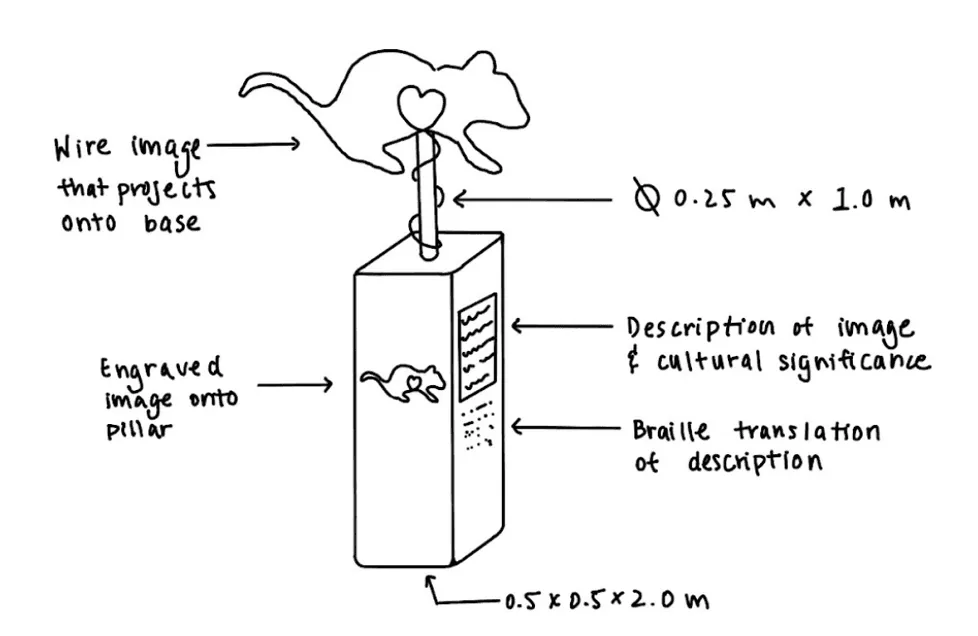
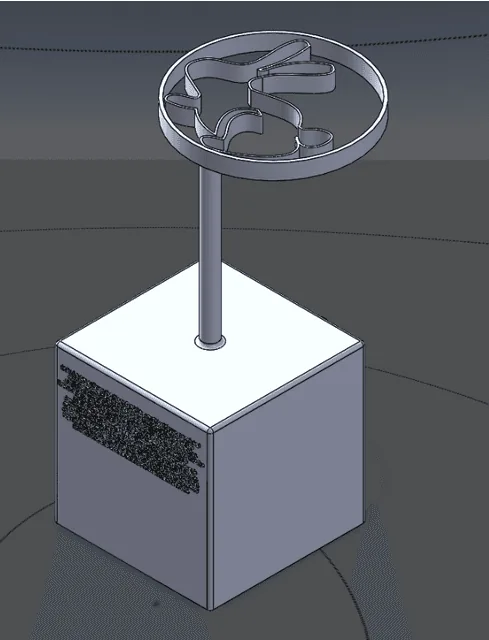
The pillars are designed so that sunlight casts shadows of wire-frame images onto the ground. However, to ensure interactivity at all times, the same images are engraved onto the pillars for tactile engagement. The use of wire allowed for intricate designs and flexibility in creative expression.
Data-driven design decisions
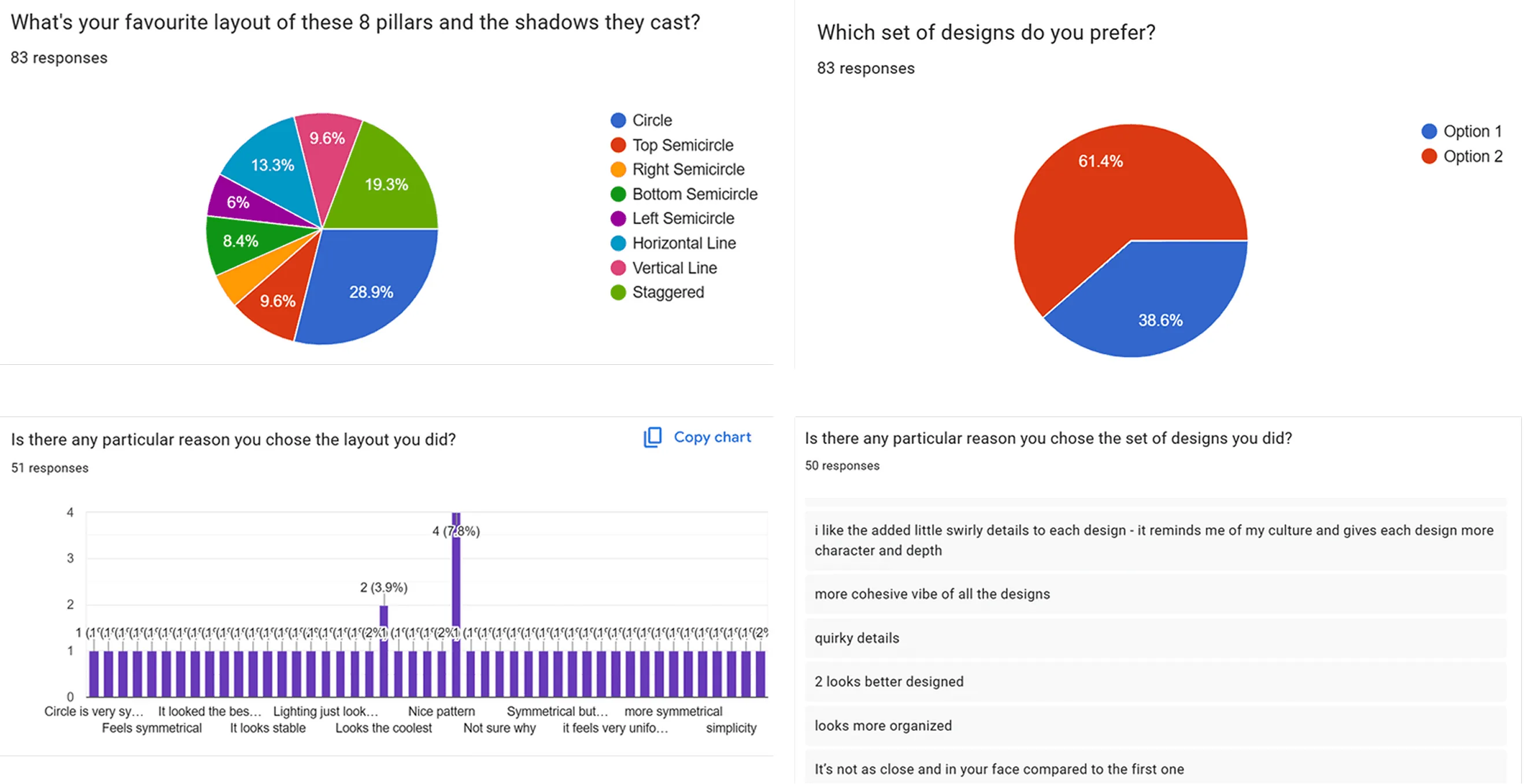
Many design choices were guided by survey data. We asked users about pillar layout preferences and pillar aesthetics, which allowed us to iterate using feedback loops and create detailed specs, benchmarks, and design analyses.
To better understand the full scope of our installation, our team created a systems diagram outlining all inflows, outflows, clouds, and links within the project. This diagram helped us visualize how materials, energy, information, and user interactions move through the system, allowing us to identify areas for improvement in accessibility, sustainability, and user engagement. It served as a valuable tool for aligning our design decisions with our goals of inclusivity and impact.
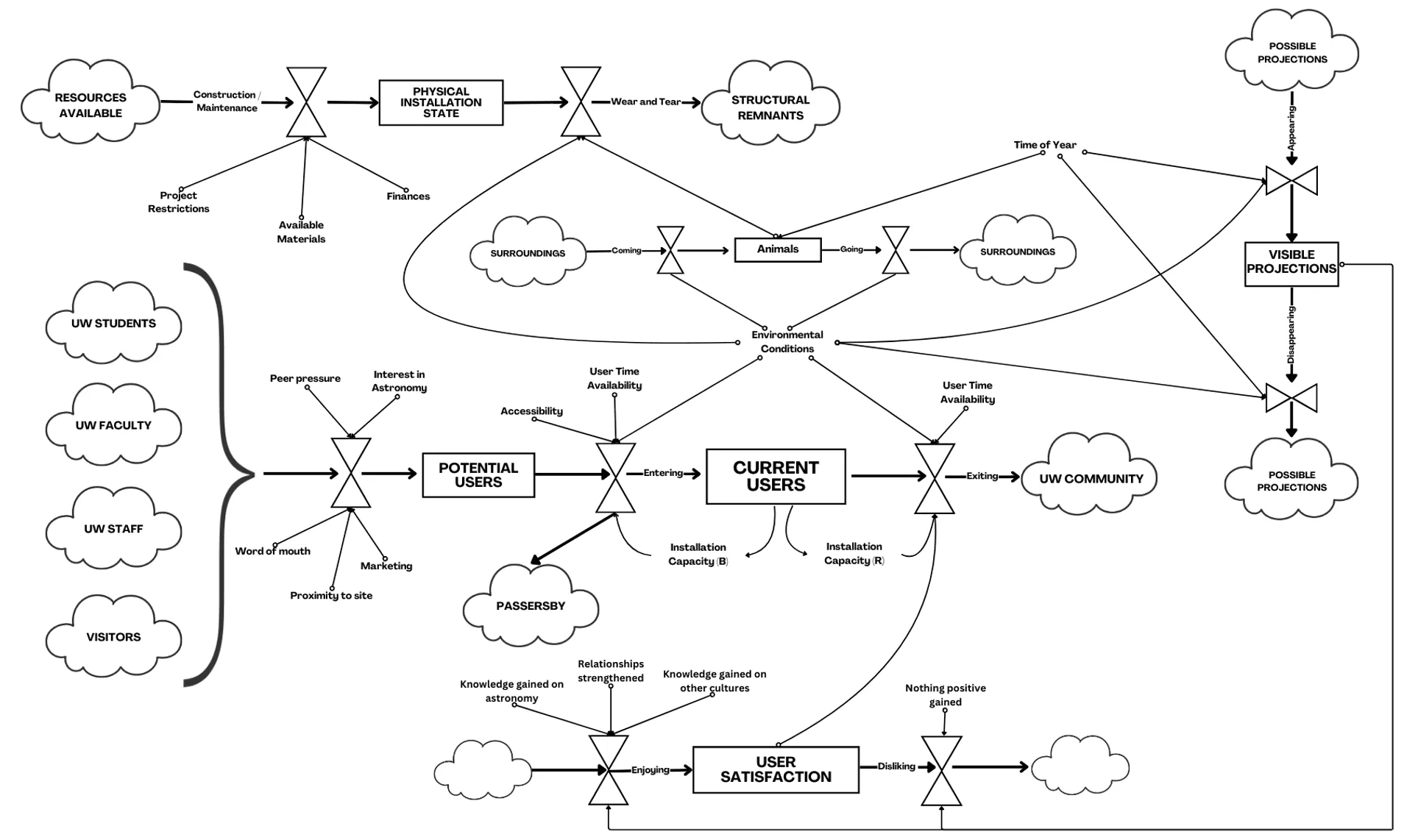
A very detailed systems diagram!
Key Takeaways
How to truly design
This project taught me a lot about the iterative design process and the importance of accessibility, inclusivity, and sustainability in public installations. I developed technical documentation skills, improved in both physical and digital prototyping, and saw how design can bring communities together. Our prototype successfully addressed both functional and emotional goals — and has real potential to make a meaningful impact if implemented.