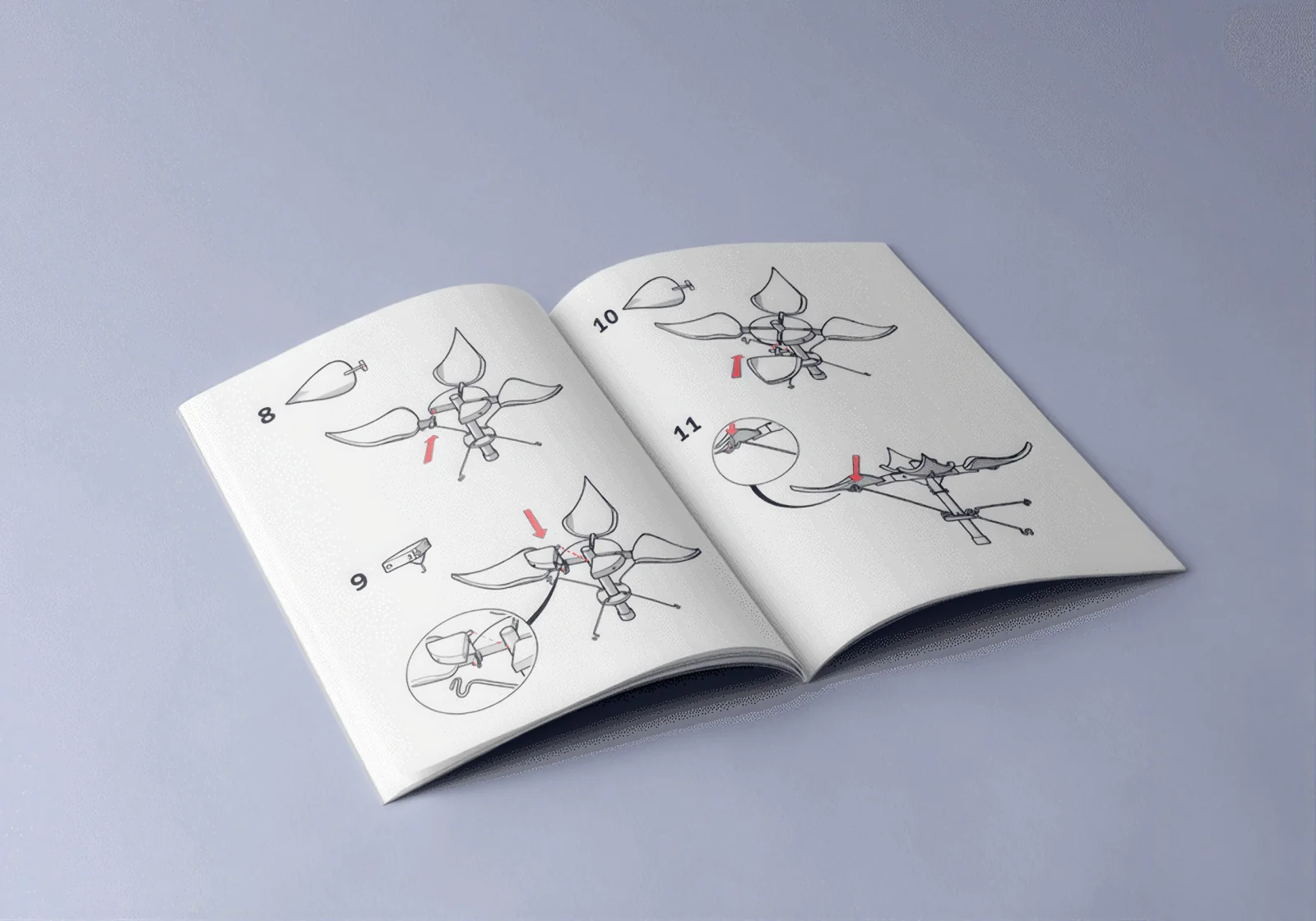
Overview
A 17-piece puzzle that hides three Canadian animals inside a flower.
Concept & Vision
Aesthetic meets mechanism.
The BuBeGooMoo combines the team goal of creating an interactive, whimsical puzzle, so the puzzle has a heavy emphasis on aesthetics in addition to its mechanism.
The BuBeGooMoo consists of 3 Canadian animals — a beaver, a goose, and a moose — and the bunchberry, the unofficial national flower of Canada. The puzzle consists of 13 3D-printed elements, with a total print time of 11 hours and 22 minutes. Included are also 4 removable wire elements serving a role in the flower opening mechanism, resulting in a 17-piece puzzle.
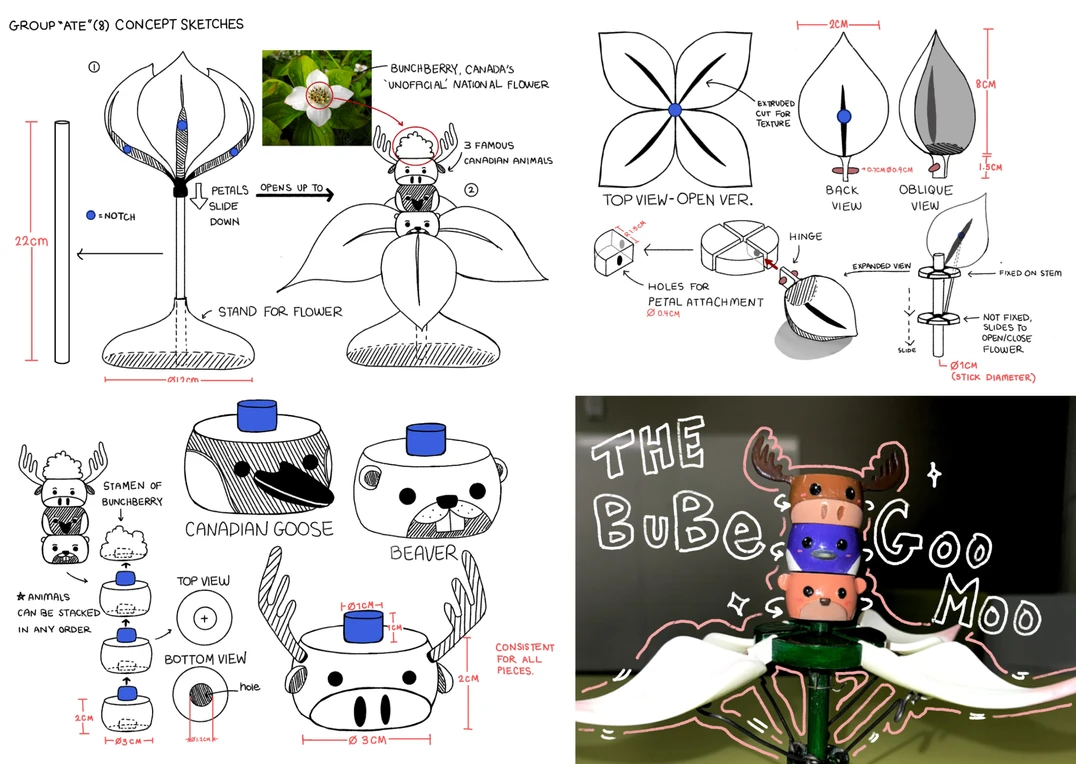
Concept sketches leading to the final BuBeGooMoo.
Ideation & Exploration
Excitement for tangibility
Entering this project, I was very excited that we were tasked to create something that would be tangible, and I had several ideas. As a team, we brainstormed several concept sketches and had an open discussion about what we believed would be a feasible yet interesting puzzle project.
At the time, there were several options, since there are so many Canadian motifs, but we narrowed it down and voted on the flower slider that would uncover significant animals when its petals folded down.
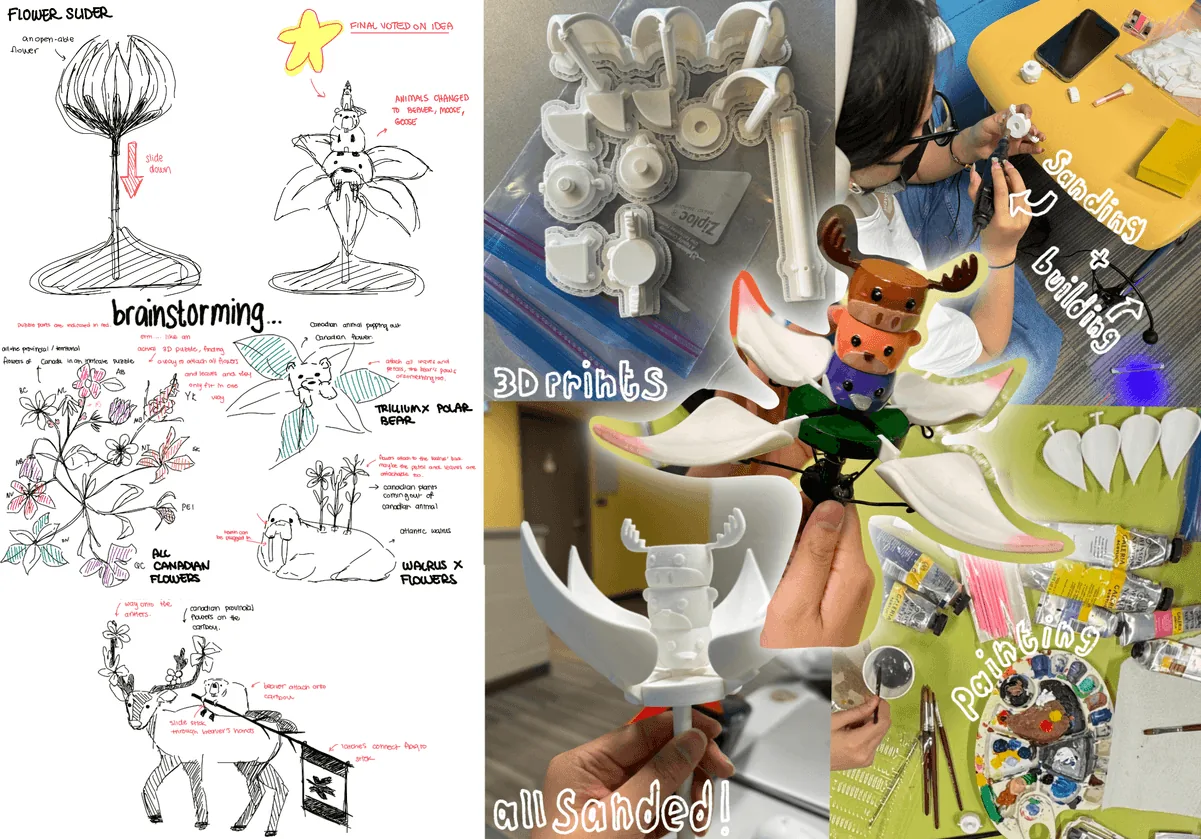
Brainstorming the Puzzle and the Process
Inspiration from everyday objects
For the actual mechanisms and parts, we drew inspiration from everyday objects: the flower opening mechanism was inspired by an upside-down umbrella, whereas the animal heads were designed with inspiration from Lego’s modular design to emphasize simplicity. To ensure a smooth workflow, I designed the concept sketches to be as detailed as possible, making the transition from ideation to SolidWorks accurate and scalable. This allowed us to divide up tasks more efficiently and model each part to fit seamlessly in the assembly.
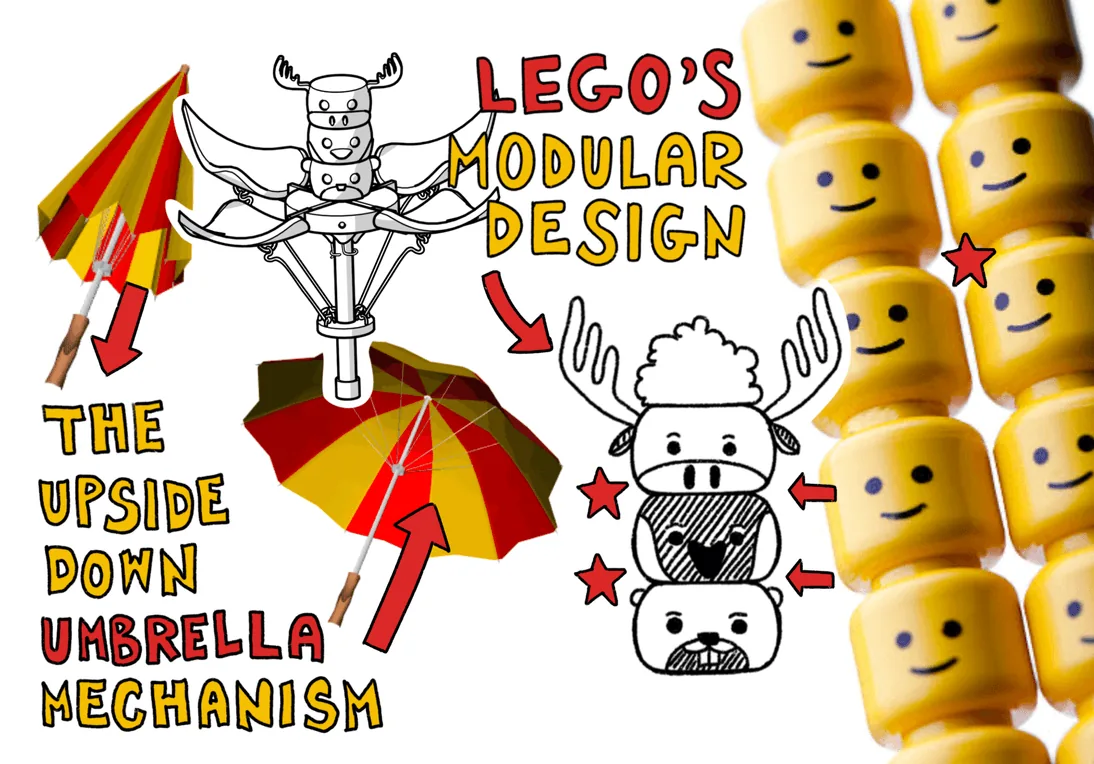
Real world object inspiration
Iteration & Adaptation
Adjusting design based on feasibility
Still, this design process was not linear. There were several times where we had to revisit and reiterate different aspects of our project. For instance, we replaced some of our 3D printed components with non-3D parts, like the wires used for our actual flower mechanism, and it proved to be a much simpler solution that offered more stability for the flowers to move.
We followed the engineering design process of prototyping, testing, and implementing, and a fully functioning low-fidelity prototype was created to ensure the mechanism would work. There were also issues with the accuracy of the printer. Despite careful dimensioning, our printed parts did not fit perfectly, so we adapted by sanding and drilling pieces down, using various tools we had at hand.
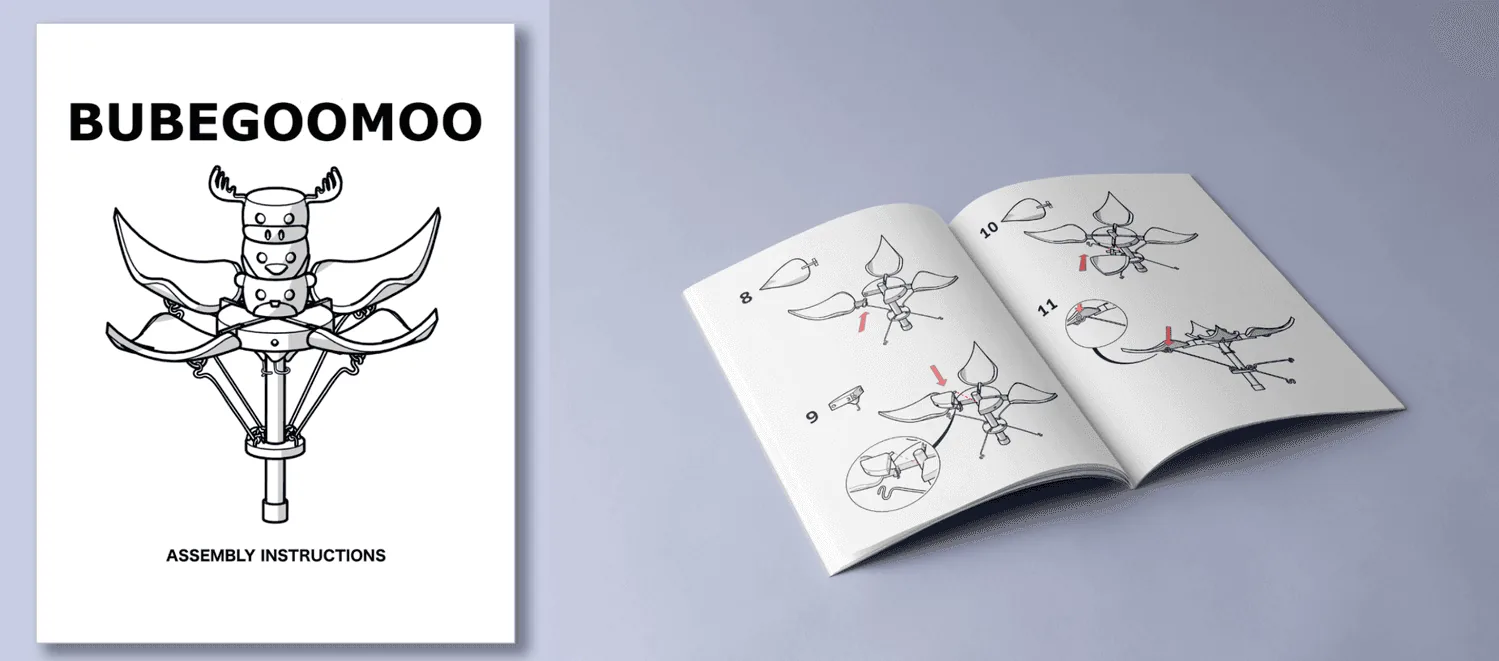
View the full assembly instructions manual
Key Takeaways
Iterate, iterate, iterate!
The BuBeGooMoo taught me to embrace iteration and stay adaptable when things didn’t go as planned. It pushed me to balance playful design with functional mechanisms and strengthened my confidence in hands-on prototyping. Most of all, it showed me the value of collaboration and how great ideas can grow through teamwork and experimentation.